
BONDS … CONSTRUCTION BONDS
June 4, 2013

Maine voters approved a local bond issued to fund South Portland High School’s $39 million addition and renovation project currently under construction by PC Construction
There are few among us fortunate enough to be able to pay cash for a brand new car or home. Not surprisingly, most people finance these big-ticket items through bank loans and mortgages they then pay off over a number of years.
The problem is, when it comes to similar long-term financing of critical infrastructure investments, voters haven’t been in a borrowing mood. This has led to a growing backlog of needed maintenance, upgrade and replacement projects nationwide.
The resulting decay caused by underinvestment is starkly documented in the 2013 Report Card for America’s Infrastructure released recently by the American Society of Civil Engineers (ASCE). Issued every four years, the report card assigns letter grades to 16 key infrastructure elements such as bridges, drinking water, roads and schools.
ASCE’s 2013 assessment provides a sobering look at the current state of our nation’s underpinnings: Eleven sectors were tagged with D+ to D- grades; four were deemed worthy of C+ to C- grades; and only one sector – solid waste – managed a respectable B- grade.
But it doesn’t have to be that way. Increased voter support of local and state bond referendums – many of which are amplified by generous federal matching funds – would go a long way toward cleaning up the backlog. What’s more, with interest rates at historic lows, financing the cost of building new or upgrading existing infrastructure is as cheap as it will ever be.
Deferred maintenance is always the most expensive choice. Now is the time to make important investments in America’s crumbling infrastructure and, by extension, our future.
Members of the DC Water staff recently toured the drop shaft into which a massive tunnel boring machine will be lowered to start the construction of a four-mile tunnel. This machine, which is more than 400 feet long and weighs over 1,300 tons, will create a 23-foot-diameter tunnel.


PC Construction has a storied history of successfully completing energy-related projects throughout Northern New England, from electric and hydroelectric to natural gas and – most recently – biomass.
In response to the growing interest in integrated delivery construction projects, the Pennsylvania section of the American Water Works Association has incorporated a DBIA (Design-Build Institute of America) day into their
The scenery outside the entrance of CVPH Medical Center looked a little busy last week. Set to achieve a project milestone, PC Construction and Vermont Mechanical stood by as Demag Riggers Crane Service set up a 200-ton hydraulic crane. The goal for the day was to hoist several pieces of temporary and permanent mechanical equipment onto the roof. Once the temporary HVAC equipment is set in place and put into service, the team will move forward with the demolition of an existing air handling unit the first week of May. Upon completion, the crane will be brought on site again to bring in the new air handler.

Construction began this week on the second phase of the Champlain College Residential Tri Complex project in Burlington, Vermont. Like Juniper Hall, which was constructed by PC Construction last year, the two new residential halls, Butler and Valcour, will be built with gorgeous views overlooking Lake Champlain and the three islands after which they are named. Upon completion, the halls will help accommodate the increasing enrollment at Champlain College by housing a total of 182 students.


When the time came for Colby College to expand their central heating plant, they specifically sought out a cleaner and more efficient alternative to oil. That vision has turned to reality – the College now boasts a high-tech facility complete with a woodchip-fueled biomass boiler system. With construction completed by PC Construction last year, Colby anticipates an annual savings of more than $1 million at current market prices.
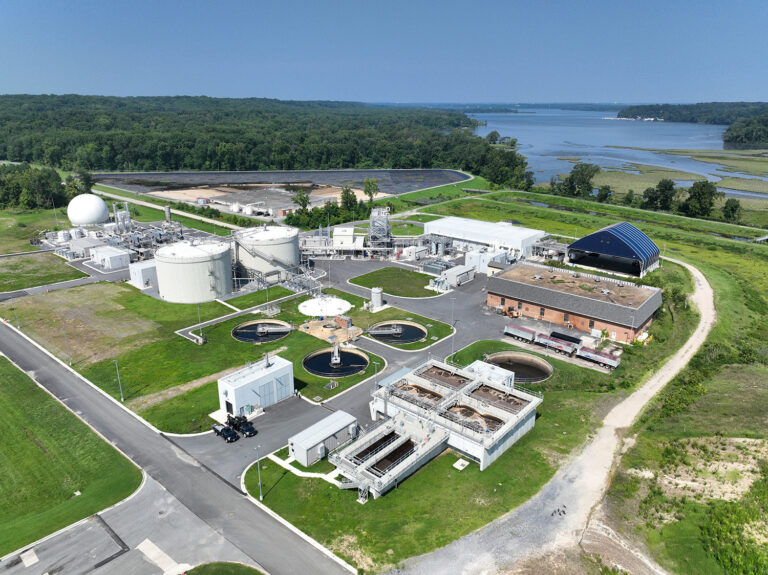
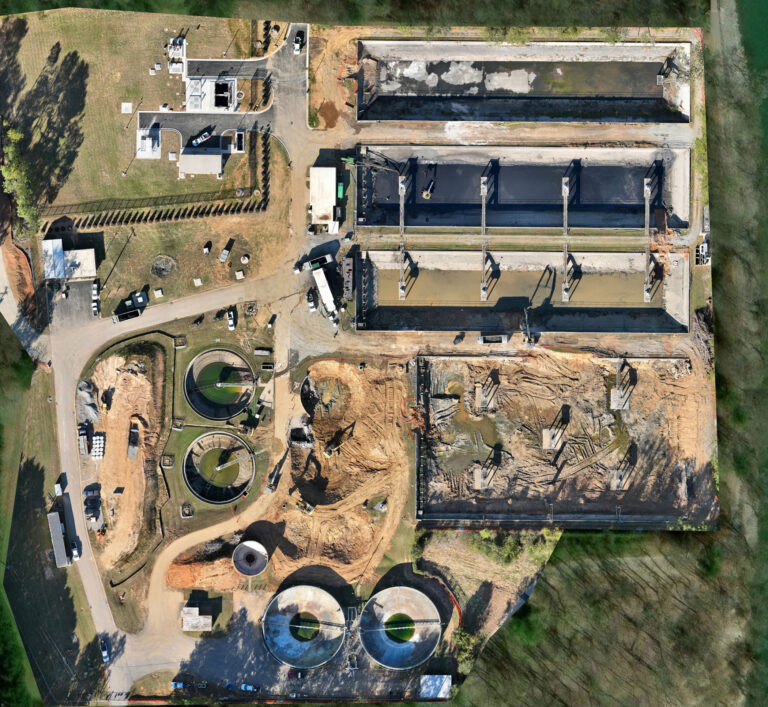
A $22.6 million upgrade of an existing wastewater treatment facility to include a new headworks building, primary clarifiers, pump gallery, thermophilic digester tank, sanitary pump station, and plant water pump station. The project also includes modification work to the existing secondary clarifiers, dewatering building, digester complex, control building, chlorine building and contact channels, and selector building with a Moving Bed Biofilm Reactor (MBBR) system. The narrow site is bordered by the Connecticut River on one side and the Vermont Rail System on the other. Lay down and construction staging areas are at a premium. The congested site coupled with deep excavations, around the clock site dewatering and PC forces self-performing the site, concrete and process mechanical work made this project a daily challenge for the project team.
A $26 million renovation and upgrade of an existing water treatment plant originally constructed in the early 1900s. Work included the complete rehab of an aged high service pump room, the building of a new raw water pump station and intake structure along with the installation of all new raw water intake and high service distribution lines, new pressure reducing building and required piping controls, and the addition of a new 3.1 MW generator. The team faced the difficulty of replacing all large underground piping while maintaining service to the community. Every bucket of excavation brought a new challenge with how to support the existing piping while installing the new and ensuring that our crews were protected. This was accomplished with no disruptions to the existing plant and no incidents.
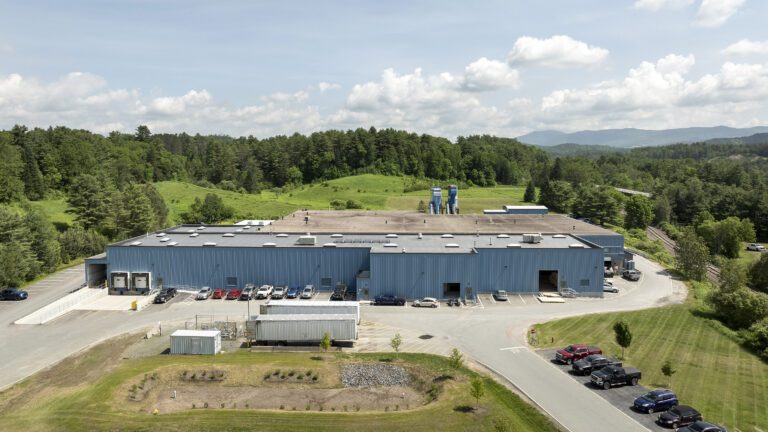
A 38,000-square-foot, three-story expansion of an existing facility to house a new hydraulic board press. To support the weight of the new two-million-pound press, the structural design required the installation of 84 caissons socketed into the sloped bedrock below the addition. Due to the size and weight of its various components, the hydraulic press was erected and the addition built around it. The complexity of erecting the structural steel and constructing the building envelope around the press on a fast-track timeline had unique complications adding to the complexity of the project. Construction personnel worked around and above this three-story press while specialty press erectors and contractors completed the installation of the equipment. The project was completed on schedule with no recordable injuries. 

That’s right – the highly anticipated year-round Center for Art and Education at Shelburne Museum in Vermont is in the final stretch. Exterior finishes are nearing completion and interior finishes are well under way. On the inside, PC crews can be found finishing drywall, taping and painting, tiling bathrooms and installing the auditorium’s projection screen. The mechanical equipment will start up in early March with slate and hardwood flooring on the horizon for late March and early April.

As family businesses in Vermont grow and mature they face new challenges. First and foremost, how do business owners instill the sense of drive, responsibility and ability to solve problems that come naturally to those who started the business?


Earlier this month I enjoyed my second day-long seminar as a member of the Leadership Champlain Class of 2013. 


The Northern New England Chapter of the Society for Marketing Professional Services (SMPS) yesterday hosted a tour of the Peter T. Paul School of Business & Economics that PC Construction is currently building for the University of New Hampshire. The approximately 115,000-square-foot, $40-million facility greatly impressed the SMPS attendees, particularly its liberal use of natural materials combined with around $2 million worth of high-tech components. By all accounts, the building will be a campus gem when completed early next year.